Recurrent cancer
Cancer that returns after treatment, often more aggressive.
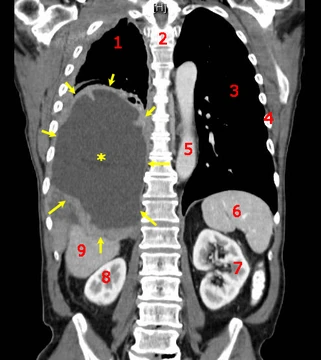
Recurrent cancer is a return of the disease after treatment, caused by a small number of original tumor cells that survived therapy in tiny, undetectable pockets. If the returning cancer has spread to other parts of the body or become resistant to chemotherapy, it can be more aggressive than the first occurrence. Generally, the shorter the time between initial treatment and the return, the more severe the cancer. Some of the highest recurrence rates are seen in glioblastoma (nearly 100%), epithelial ovarian cancer (85%), and bladder cancer (30–54%).
The original tumor site or another part of the body can be where the cancer returns. Over time, surviving cells accumulate genetic changes and eventually form a new tumor. This process can take weeks, months, or years. After surgery, chemotherapy, or radiation, some tumor cells may persist, develop treatment resistance, and grow into new tumors. Recurrence rates depend on factors like age, sex, cancer type, treatment length, stage, original tumor grade, and specific risk factors.
There are three types of recurrence: local (at the same site as the original), regional (in nearby tissue or lymph nodes), and distant (in tissue far from the original site, also called metastatic recurrence).
Cancer stem cells (CSCs) are a small part of the tumor mass that drive early formation, progression, and recurrence, and they also contribute to drug resistance. They likely come from normal stem cells, progenitor cells, or differentiated cells after genetic mutations and genomic instability. CSCs live in specialized niches within the tumor environment and have been found in brain, breast, ovarian, head and neck, and other cancers. Like normal stem cells, they can self-renew; a single CSC can divide into one CSC and one differentiated tumor cell, which makes up most of the tumor. In some cancers, CSCs remain inactive for long periods, making them resistant to treatment. Even decades after successful treatment, these dormant CSCs can reactivate and cause recurrence.
Hypoxia, chemotherapy, and radiation can create polyploid giant cancer cells (PGCCs). Some PGCCs undergo neosis, a process involving nuclear budding, asymmetric cell division, and the creation of tiny mononuclear cells called Raju cells, which have stem-cell-like traits. These cells help drive recurrence and therapy resistance.
The "phoenix rising" process describes
- highest_recurrence_rate_glioblastoma
- almost 100%
- highest_recurrence_rate_epithelial_ovari
- 85%
- highest_recurrence_rate_bladder_cancer
- 30–54%
- types
- local, regional, distant (metastatic)
- key_cause_cancer_stem_cells
- self-proliferation, quiescence, drug resistance
- key_cause_neosis
- polyploid giant cancer cells generate Raju cells
- key_cause_phoenix_rising
- apoptotic cells release PGE2, aiding cancer stem cell expansion
Lore & Background
Recurrent cancer arises when a fraction of primary tumor cells evade treatment and survive in undetectable spaces. These surviving cells accumulate genetic changes over time, eventually producing new tumors. It can take weeks, months, or even years for cancer to return. Following surgery, chemotherapy, or radiotherapy, certain tumor cells may persist and develop resistance, leading to new tumors. The rate of recurrence is determined by many factors, including age, sex, cancer type, treatment duration, stage, grade, and cancer-specific risk factors.
Reader's Guide
Recurrent cancer is a significant clinical challenge because it often proves more aggressive than the original cancer, especially if it has metastasized or developed chemo-resistance. Cancers with the highest recurrence rates include glioblastoma (nearly 100%), epithelial ovarian cancer (85%), and bladder cancer (30–54%). The mechanisms underlying recurrence include cancer stem cells, which can remain quiescent for long periods and resist treatment; neosis, where polyploid giant cancer cells generate stem-like Raju cells; and the phoenix rising process, where apoptotic cells release PGE2 to promote cancer stem cell expansion. Early diagnosis of recurrence can improve prognosis, but current therapies often fail due to resistance and inability to eradicate cancer stem cells. New treatments targeting CSC surface markers, the ABC cascade, the microenvironment, or signal cascades are being tested in clinical trials.
Did You Know?
- Glioblastoma has a recurrence rate of almost 100%.
- Cancer stem cells can remain quiescent for decades before reactivating to cause recurrence.
- Polyploid giant cancer cells can undergo neosis to generate stem-like Raju cells.
- Apoptotic tumor cells release PGE2, which aids cancer stem cell expansion.
More in Cancer 1-22
Spotted an error? Know more?
This is a living reference — every entry is fact-audited, and reader corrections feed straight into our audit queue. Suggest an edit · See this site's audit record