Cancer
A group of diseases involving uncontrolled cell growth.

Wikipedia / Wikimedia Commons
Cancer isn’t one single illness but a large family of them, all marked by cells that grow out of control. These rogue cells often form masses called malignant tumors, which can invade nearby tissues or travel to other parts of the body—unlike benign tumors, which stay put. More than a hundred distinct types of cancer affect people. The term itself traces back to the ancient Greek word *karkinos*, meaning both “crab” and “tumor,” because Greek doctors like Hippocrates and Galen thought the swollen veins around some growths looked like crab legs. English adopted the word in its modern medical sense around the year 1600.
Roughly one-third of cancer deaths are linked to tobacco, alcohol, obesity, diets low in fruits and vegetables, and lack of physical activity. Other contributors include certain infections, ionizing radiation, and environmental pollutants. Worldwide, about 16 to 18 percent of cancers stem from infectious agents—specifically the bacteria *Helicobacter pylori*, hepatitis B and C viruses, and human papillomavirus (HPV). HIV doesn’t cause cancer directly, but the immune deficiency it creates can dramatically raise the risk of cancers triggered by other infections, sometimes by thousands of times. Vaccines against hepatitis B and HPV have been shown to nearly wipe out the risk of cancers caused by those viruses.
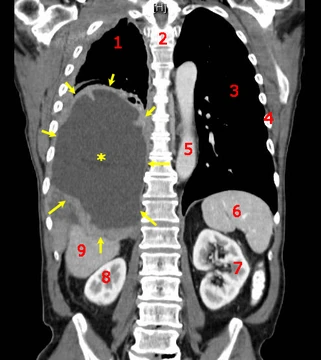
These external factors work, at least in part, by altering a cell’s genes. Usually, many genetic changes must pile up before cancer develops. Only about 5 to 10 percent of cancers come from inherited genetic defects. Doctors can spot cancer through symptoms or screening tests, then investigate further with medical imaging and confirm it with a biopsy.
You can lower your cancer risk by not smoking, keeping a healthy weight, limiting alcohol, eating plenty of vegetables, fruits, and whole grains, getting vaccinated against certain infections, cutting back on processed and red meat, and avoiding too much direct sunlight. Screening catches some cancers early—it’s clearly useful for cervical and colorectal cancer, though the benefits for breast cancer screening are debated. Treatment often combines surgery, radiation, chemotherapy, and targeted drugs. Newer, more personalized approaches harness the patient’s own immune system, a field called cancer immunotherapy. Palliative care, a medical specialty focused on managing pain and symptoms, becom
- types
- Over 100 types affect humans
- global_cases_2015
- About 90.5 million people worldwide
- annual_cases_2019
- 23.6 million new cases
- annual_deaths_2019
- 10 million deaths
- five_year_survival_US
- 66% for all ages
- five_year_survival_children_developed_wo
- 80% for under 15 at diagnosis
- economic_cost_2010
- US$1.16 trillion per year
Lore & Background
Cancer comprises a large family of diseases that involve abnormal cell growth with the potential to invade or spread to other parts of the body, forming a subset of neoplasms. All tumor cells show six hallmarks of cancer: cell growth and division absent proper signals, continuous growth despite contrary signals, avoidance of programmed cell death, limitless cell divisions, promoting blood vessel construction, and invasion of tissue with formation of metastases. The progression from normal cells to a detectable mass to cancer involves multiple steps known as malignant progression. When cancer begins, it produces no symptoms; signs and symptoms appear as the mass grows or ulcerates, and findings depend on the cancer's type and location. Local symptoms may include lumps, bleeding, or blockages, while systemic symptoms can include fatigue, unintentional weight loss, fever, or paraneoplastic syndromes caused by hormones or molecules produced by the tumor.
Reader's Guide
Cancer is a major global health burden, with about 90.5 million people worldwide having cancer in 2015 and 10 million deaths in 2019. The majority of cancers (90–95% of cases) are due to environmental and lifestyle factors, including tobacco use (25–30%), diet and obesity (30–35%), infections (15–20%), and radiation (up to 10%). Approximately 5–10% are due to inherited genetic defects. The most common types in males are lung, prostate, colorectal, and stomach cancer; in females, breast, colorectal, lung, and cervical cancer. In children, acute lymphoblastic leukemia and brain tumors are most common, except in Africa where non-Hodgkin lymphoma occurs more often. Risk can be reduced by not smoking, maintaining a healthy weight, limiting alcohol, eating vegetables and fruits, vaccination against certain infectious diseases, and limiting exposure to direct sunlight. Treatment often combines radiation therapy, surgery, chemotherapy, and targeted therapy, with emerging personalized immunotherapies. Palliative care is important for advanced disease. The chance of survival depends on the type and extent of disease at diagnosis.
Did You Know?
- About 33% of deaths from cancer are caused by tobacco and alcohol, obesity, lack of fruit and vegetables, and lack of exercise.
- Infection with specific viruses, bacteria, and parasites causes approximately 16–18% of cancers worldwide.
- Vaccination against hepatitis B virus and human papillomavirus has been shown to nearly eliminate the risk of cancers caused by these viruses.
- The risk of suicide in people with cancer is approximately double.
Frequently Asked Questions
Who is Cancer?
Cancer isn't a single villain but a sprawling cast of more than a hundred distinct diseases, all united by one trait: cells that multiply without the usual regulatory brakes. These runaway cells can cluster into malignant tumors that invade surrounding tissue or hitch a ride to distant organs.
What are Cancer's powers or role?
Its signature ability is turning a body's own cells into uncontrolled proliferators. Unlike benign growths that simply sit where they form, malignant ones can burrow into neighboring tissue or seed entirely new colonies elsewhere in the body.
How does Cancer's story end?
The outcome varies widely by type and stage, but in the United States roughly two-thirds of all diagnosed patients are still alive five years later. For children under fifteen in developed countries, that figure climbs to about four in five.
Why is Cancer important?
It remains one of the most widespread health threats on the planet: in 2019 alone an estimated 23.6 million new diagnoses were recorded and around ten million lives were lost. As of 2015, roughly 90.5 million people worldwide were living with some form of the disease.
What's the origin of Cancer's name?
The word reaches back to the ancient Greek karkinos, which meant both 'crab' and 'tumor.' Physicians such as Hippocrates and Galen reportedly chose the crab image because the swollen, branching veins encircling certain growths reminded them of a crab's legs.
More in Cancer 1-22
Spotted an error? Know more?
This is a living reference — every entry is fact-audited, and reader corrections feed straight into our audit queue. Suggest an edit · See this site's audit record